Tablet coating is a critical manufacturing step that transforms a plain compressed tablet into a finished, patient-acceptable dosage form. Coating improves appearance, masks unpleasant taste and odour, controls drug release (modified or enteric release), protects the tablet from moisture and light, and differentiates the product by colour and branding. Understanding the tablet coating process, coating types, and equipment helps manufacturers choose the right system for their product.
As a trusted Coating Pan manufacturer, supplier and exporter in India, Bipin Pharma Equipment manufactures GMP-compliant coating pans for pharmaceutical tablet coating lines.
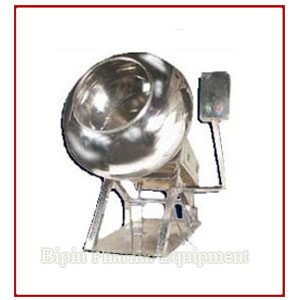
Standard and perforated coating pan for tablet film coating, sugar coating, and enteric coating. Available 3 kg to 500 kg batch.
View Coating Pan →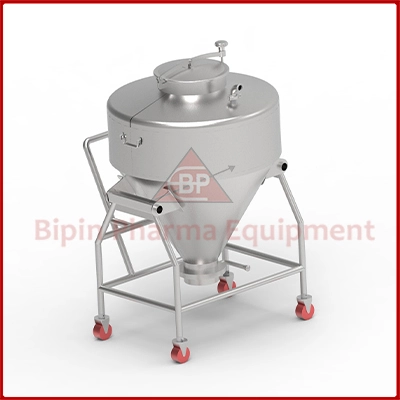
Transfers compressed tablets from the tablet press to the coating pan in a closed, GMP-compliant container.
View IPC Bin →The most widely used coating method in modern pharmaceutical manufacturing. A thin polymer film (HPMC, HPC, Eudragit, PVA) is applied to the tablet surface by spraying an aqueous or organic polymer solution while the tablets tumble in the coating pan. The film is typically 2–5% weight gain of the tablet. Film coating is fast (2–4 hours), reproducible, and easily scaled up.
The traditional coating method, now largely replaced by film coating. Sugar (sucrose) is applied in multiple layers (sealing, sub-coating, smoothing, colouring, polishing) to the tablet surface, adding 30–50% weight. Sugar-coated tablets have a rounded, elegant appearance. The process is time-consuming (8–24 hours for multi-step application) and requires significant skill.
Enteric coating uses acid-resistant polymers (cellulose acetate phthalate, Eudragit L/S, HPMCP) that resist dissolution in gastric acid (pH <5) but dissolve readily in intestinal fluid (pH >6). Used for: drugs irritating to gastric mucosa (aspirin, NSAIDs), drugs degraded by gastric acid (proton pump inhibitors, enzymes), and drugs requiring intestinal absorption.
The Coating Pan consists of a perforated or solid stainless steel pan mounted at an angle on a horizontal axis. The pan rotates, tumbling the tablets. A spray gun (or multiple guns for large pans) applies the coating solution in a fine mist onto the rolling tablet bed. Heated inlet air dries the applied coating; exhaust air removes moisture-laden air from the pan. The coating cycle continues until the required weight gain is achieved.
| Parameter | Standard Coating Pan | Perforated Coating Pan |
|---|---|---|
| Air flow | Over tablet bed surface | Through tablet bed (perforated pan) |
| Drying efficiency | Moderate | High (air passes through bed) |
| Cycle time | Longer | Shorter (faster drying) |
| Film uniformity | Good | Excellent |
| Batch size | 3 kg to 200 kg | Up to 500 kg+ |
| Capital cost | Lower | Higher |
| Best for | Sugar coating, small batches | Film and enteric coating, large batches |
| Parameter | Typical Range | Effect |
|---|---|---|
| Pan Speed (RPM) | 4–20 RPM | Tablet mixing, film uniformity |
| Inlet Air Temperature | 50–70°C | Drying rate |
| Exhaust Air Temperature | 40–55°C | Product temperature indicator |
| Spray Rate | Product-specific (g/min) | Coating build-up rate, uniformity |
| Atomisation Air Pressure | 1–3 bar | Droplet size, spray pattern |
| Target Weight Gain | 2–5% (film) / 30–50% (sugar) | Coating thickness, function |
Tablet coating is essential for product quality, patient compliance, and regulatory approval. Film coating in a perforated coating pan is the current industry standard for most pharmaceutical products. Bipin Pharma Equipment manufactures GMP-compliant standard and perforated Coating Pans for all coating types and batch sizes. Contact us for a coating pan recommendation and free quote today.
Our technical team can recommend the right equipment — free consultation.
Send Enquiry Call: +91 88791 92449Manufacturer & exporter of Standard and Perforated Coating Pans for pharmaceutical tablet film coating, sugar coating, and enteric coating. GMP-compliant, 25+ countries served. Contact us today.
Request a Free Quote View Coating Pan