
Granulation is the foundation of solid dosage manufacturing. Every tablet or capsule formulation requires granules — and how you make those granules determines your product's quality, stability, and manufacturing efficiency. The two primary methods are wet granulation and dry granulation. Choosing between them is one of the most critical formulation decisions in pharmaceutical manufacturing.
As a leading pharma equipment manufacturer in India, we have supplied granulation systems for both wet and dry processes across hundreds of facilities. This guide gives you a thorough, practical comparison to make the right decision for your product.
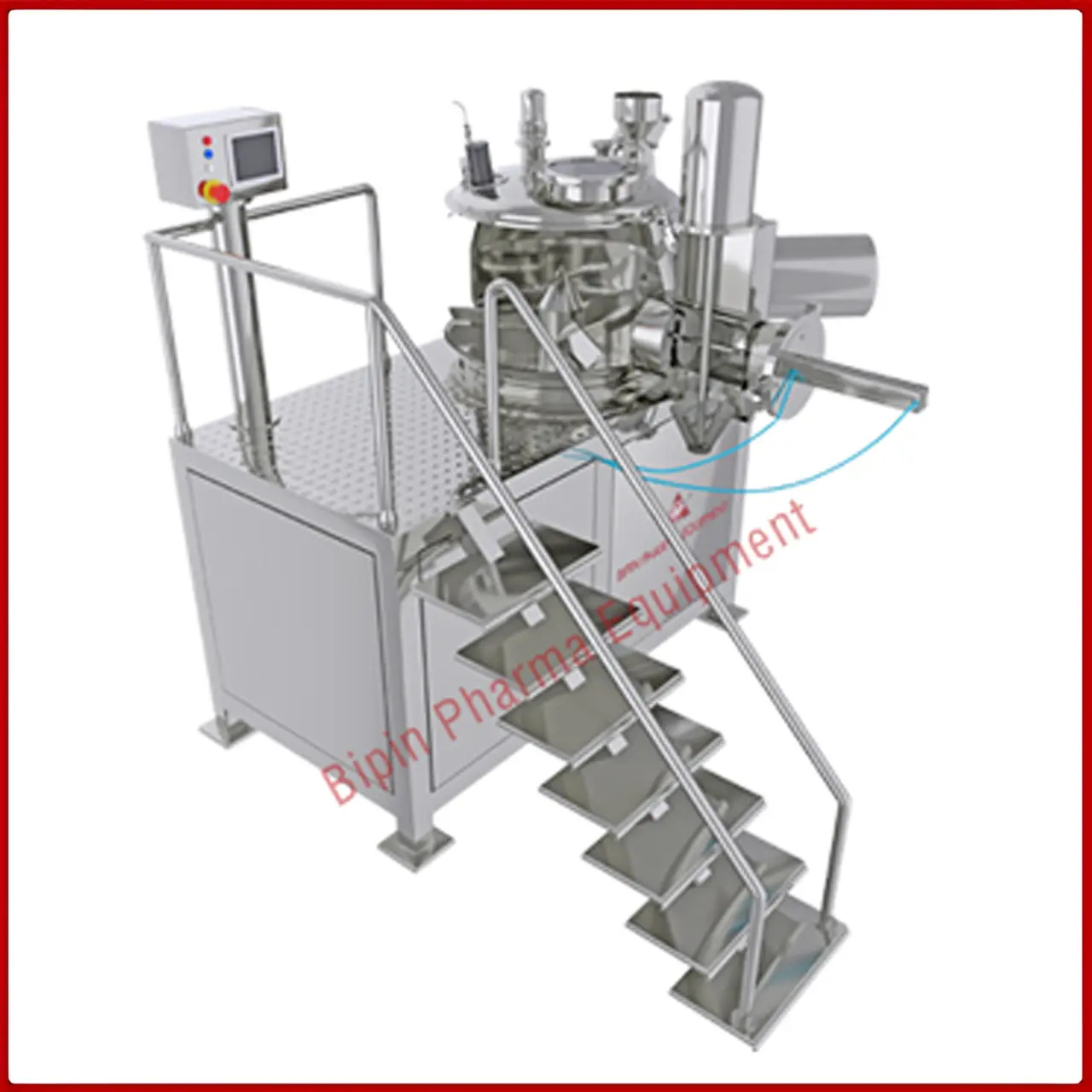
Rapid Mixer Granulator (RMG)
The core equipment for wet granulation — combines mixing, wet massing, and granulation in a single GMP-compliant high-shear bowl.
View RMG →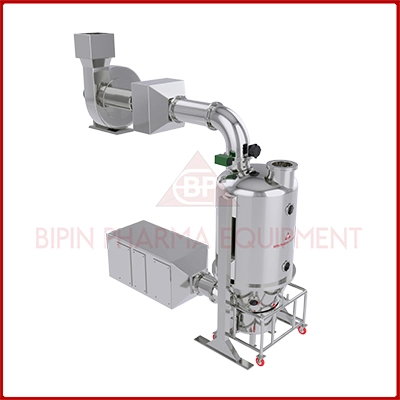
Fluid Bed Dryer (FBD)
Dries wet granules from the RMG in 20–60 minutes with excellent LOD uniformity — the standard dryer in every wet granulation line.
View FBD →What is Wet Granulation?
Wet granulation adds a liquid binder (water, ethanol, aqueous PVP/HPC solution) to a dry powder blend to form granules. The liquid promotes bonding between particles, creating larger, free-flowing granules. These wet granules are then dried (using a Fluid Bed Dryer) and milled before tablet compression.
Wet Granulation Process Flow
| Step | Operation | Equipment |
|---|---|---|
| 1 | Dry mixing of API + excipients | Rapid Mixer Granulator |
| 2 | Binder addition + wet massing | Rapid Mixer Granulator |
| 3 | Wet granule drying | Fluid Bed Dryer / Tray Dryer |
| 4 | Dry milling | Multi Mill |
| 5 | Sifting / grading | Vibro Sifter |
| 6 | Lubrication blending | Double Cone / Octagonal Blender |
| 7 | Transfer to compression | IPC Bin |
Advantages of Wet Granulation
- Excellent flowability — granules flow uniformly into tablet press dies
- Improved compressibility — granules compress into harder, more uniform tablets
- Better content uniformity — critical for low-dose APIs
- Reduced dust — safer for operators vs fine powder blends
- Enhanced dissolution control — binder selection can modify API release rate
Disadvantages of Wet Granulation
- Introduces moisture — not suitable for moisture-sensitive APIs
- More process steps = higher equipment investment (RMG + FBD + Multi Mill)
- Risk of hydrolysis when water contacts certain APIs
What is Dry Granulation?
Dry granulation produces granules without any liquid binder. The powder blend is compacted under high pressure using a roller compactor (forming ribbons) or slugging machine (forming large tablets called slugs). These are then broken into granules using a mill.
Dry Granulation Process Flow
| Step | Operation | Equipment |
|---|---|---|
| 1 | Dry blending of API + excipients | Double Cone / Octagonal Blender |
| 2 | Roller compaction (ribbon formation) | Roller Compactor |
| 3 | Milling of ribbons | Multi Mill |
| 4 | Sifting / grading | Vibro Sifter |
| 5 | Lubrication blending | Double Cone / Octagonal Blender |
| 6 | Transfer to compression | IPC Bin |
Full Comparison — Wet vs Dry Granulation
| Parameter | Wet Granulation | Dry Granulation |
|---|---|---|
| Liquid Binder Used? | Yes | No |
| Drying Step Required? | Yes (FBD or Tray Dryer) | No |
| Moisture Sensitive APIs | ❌ Not suitable | ✅ Suitable |
| Heat Sensitive APIs | ⚠ Depends on dryer temp | ✅ No heat step |
| Tablet Hardness | Excellent | Good |
| Content Uniformity | Excellent | Good |
| Flowability | Excellent | Good |
| Dissolution Control | High (via binder selection) | Moderate |
| Process Steps | 6–8 steps | 4–6 steps |
| Key Equipment | RMG + FBD + Multi Mill + Blender | Roller Compactor + Multi Mill + Blender |
| Capital Investment | Higher (RMG + FBD) | Medium (roller compactor) |
| Dust Generation | Low | Higher (fines) |
| Yield | High (>98%) | Lower (fines loss) |
| Industry Use | ~70% of solid dose manufacturing | ~15–20% |
Which Method Should You Choose?
- API is thermally stable and not moisture-sensitive
- You need maximum tablet hardness, uniformity, and dissolution control
- Formulating low-dose APIs where content uniformity is critical
- Your facility already has or plans an RMG + FBD granulation suite
- API is moisture-sensitive (aspirin, effervescent formulations, some antibiotics)
- API is heat-sensitive and cannot tolerate FBD drying temperatures
- You want fewer process steps and lower energy consumption
- Formulating high-dose APIs where yield maximization matters
Granulation Equipment from Bipin Pharma Equipment
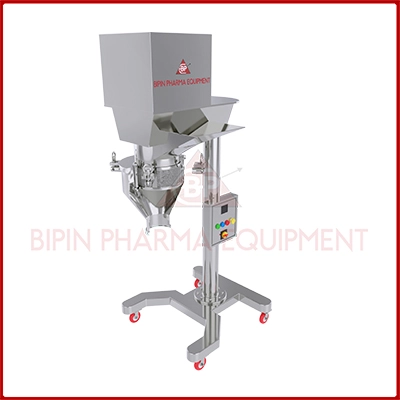
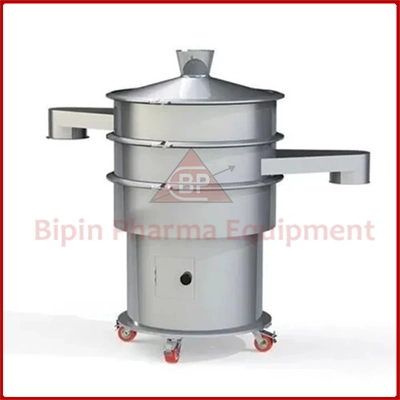
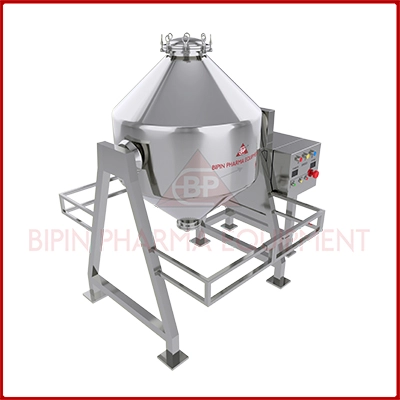
Double Cone Blender
For lubrication blending with magnesium stearate before tablet compression.
View →Wet granulation remains the gold standard for most solid dosage formulations — delivering superior flowability, compressibility, and content uniformity. Dry granulation is the right answer when moisture or heat sensitivity is a constraint. Bipin Pharma Equipment manufactures the complete granulation machinery range for both methods — contact us to discuss the right granulation line for your facility and get a free quote.