Terms & Conditions Privacy Policy Disclaimer

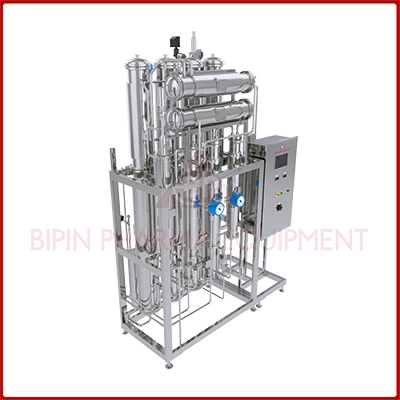
Multi Column Distillation Plant: How It Works, Key Components & Why It Matters for Sterile Manufacturing

Water for Injection (WFI) is the most critical utility in sterile pharmaceutical manufacturing. Every parenteral drug product — injectables, intravenous infusions, ophthalmic preparations, and lyophilised biologics — is manufactured using WFI as the primary solvent, diluent, or rinse water. The quality of WFI directly determines the safety and sterility of these life-critical products. The Multi Column Distillation Plant (MCD Plant) is the industry-standard technology for pharmaceutical-grade WFI generation — producing ultra-pure, pyrogen-free, endotoxin-free water that meets the most stringent pharmacopoeial specifications worldwide.

This comprehensive guide covers the Multi Column Distillation Plant in complete detail — what WFI is, why distillation is the preferred WFI generation method, the multi-effect distillation principle, the working of each column, key system components, WFI quality specifications, GMP compliance requirements, and why the Multi Column Distillation Plant is an indispensable investment for every sterile pharmaceutical manufacturer.

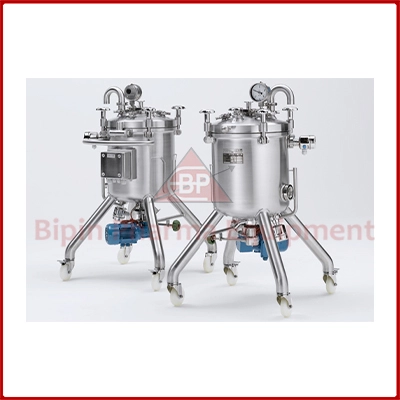
We are a leading manufacturer, supplier, and exporter of Multi Column Distillation Plants and complete sterile preparation systems including Sterile Manufacturing Vessels for pharmaceutical manufacturers in India and worldwide.

What is Water for Injection (WFI) and Why is It Critical?

Water for Injection (WFI) is the highest grade of pharmaceutical-grade water, defined in all major pharmacopoeias — Indian Pharmacopoeia (IP), British Pharmacopoeia (BP), United States Pharmacopeia (USP), and European Pharmacopoeia (EP). WFI is sterile water that meets strict limits for:

Quality ParameterWFI SpecificationWhy It Matters
Conductivity≤ 1.3 µS/cm at 25°C (USP/EP)Confirms absence of dissolved ionic impurities
Total Organic Carbon (TOC)≤ 0.5 mg/L (500 ppb)Confirms absence of dissolved organic contaminants
Bacterial Endotoxins≤ 0.25 EU/mL (USP); ≤ 0.25 IU/mL (EP)Prevents pyrogenic reactions in patients — critical for parenteral safety
Microbial count (TAMC)≤ 10 CFU/100 mL (action limit)Prevents microbial contamination of sterile products
pH5.0–7.0Compatibility with parenteral formulations
Nitrate≤ 0.2 ppmAbsence of oxidising impurities
Heavy metals≤ 0.1 ppm (as lead)Patient safety — parenteral exposure to heavy metals

The endotoxin specification is the most critical and defining quality parameter for WFI. Endotoxins are lipopolysaccharide (LPS) fragments from the cell walls of gram-negative bacteria. Even at sub-microgram concentrations, endotoxins cause severe pyrogenic reactions (fever, hypotension, organ failure) when introduced parenterally. Endotoxins cannot be removed by sterilising filtration — they pass through 0.2 µm filters freely. Only distillation and certain ultrafiltration processes can reliably remove endotoxins from water.

Why Distillation is the Preferred Method for WFI Generation

The major pharmacopoeias have historically required WFI to be produced exclusively by distillation — and for very good reason. Distillation is the only water purification method that simultaneously achieves:

  • Complete endotoxin elimination — endotoxins are non-volatile; they cannot evaporate and therefore cannot carry over into the distillate
  • Complete elimination of dissolved ionic impurities — dissolved salts, heavy metals, and inorganic ions remain in the residual water; only pure water vapour distils over
  • Complete elimination of volatile organic impurities — non-volatile organics stay in the residual; only water vapour crosses to the distillate side
  • Thermal sterilisation of the distillate — steam generated at 121–130°C is inherently sterile; the distillate is sterile at the point of production
  • Long-established regulatory acceptance — distillation for WFI generation is recognised and accepted by US FDA, EMA, IP, BP, USP, and all major regulatory agencies worldwide

While the European Pharmacopoeia revised its monograph in 2017 to also permit WFI production by membrane processes (ultrafiltration + RO) under specific conditions, distillation remains the gold standard and most widely used method globally for pharmaceutical WFI generation — precisely because of its reliability, simplicity of validation, and proven endotoxin rejection performance.

What is Multi-Effect Distillation (MED) and Why Multiple Columns?

The fundamental challenge with single-stage distillation for WFI generation is energy consumption. To produce 1 kg of WFI by single-stage distillation requires approximately 2,200 kJ of steam energy — making large-scale WFI production prohibitively expensive by single distillation. Multi-Effect Distillation (MED) solves this by reusing the heat energy of the steam from each distillation column (effect) to drive the evaporation in the next column, dramatically reducing overall steam consumption.

In a Multi Column Distillation Plant, each column operates at a progressively lower pressure (and therefore lower temperature) than the previous one. This pressure cascade allows the steam vapour produced in Column 1 (highest pressure, ~130°C) to serve as the heating steam for Column 2 (lower pressure, ~120°C), the vapour from Column 2 to heat Column 3, and so on through the column train. The result is that only Column 1 requires an external steam supply — all subsequent columns use the latent heat recovered from the preceding column's vapour.

Number of Effects (Columns)Relative Steam ConsumptionTypical WFI OutputBest Suited For
Single effect (1 column)100% (reference)50–200 L/hrSmall facilities; R&D / pilot scale
3-effect (3 columns)~33% of single effect100–500 L/hrSmall to medium sterile facilities
5-effect (5 columns)~20% of single effect300–1,500 L/hrMedium commercial sterile facilities
7-effect (7 columns)~14% of single effect500–3,000 L/hrLarge commercial injectable manufacturers
9-effect (9 columns)~11% of single effect1,000–6,000 L/hrVery large or multi-product sterile facilities

How a Multi Column Distillation Plant Works: Step-by-Step

Step 1: Feed Water Preparation (Purified Water Input)

The MCD Plant is fed with Purified Water (PW) that has already been pre-treated by the facility's water treatment system — pre-filtration, softening, reverse osmosis (RO), and electrodeionisation (EDI) or mixed bed deionisation. The PW feed must meet pharmacopoeial Purified Water specifications before entering the MCD Plant. Using pre-treated PW (rather than raw feed water) reduces the mineral and organic load on the distillation columns, significantly extending the operating intervals between cleaning and descaling.

Step 2: Feed Water Preheating

The Purified Water feed is preheated by passing it through the condensers of the final columns of the MCD plant (counter-current to the vapour flow). This heat integration — using the waste heat from the last column to preheat the incoming feed — improves overall thermal efficiency and reduces steam consumption. By the time the feed water reaches Column 1, it is already close to its boiling point, minimising the steam energy required for initial evaporation.

Step 3: Evaporation in Column 1 (First Effect)

The preheated feed water enters Column 1, the first and highest-pressure effect. Clean steam (pharmaceutical-grade steam at 121–130°C and 2–3 bar) is supplied to the shell side (or heating jackets) of Column 1. The feed water on the tube side is heated by the steam, evaporating to produce pure water vapour (the WFI vapour). Non-volatile contaminants — dissolved salts, endotoxins, pyrogens, heavy metals, and most non-volatile organics — remain in the liquid residual (blowdown) that does not evaporate. The blowdown exits from the bottom of each column and is discharged to drain.

Step 4: Vapour Separation and Mist Elimination

The water vapour produced in Column 1 passes through a specially designed separator section equipped with mist eliminators (demisters). The mist eliminators — typically made of SS316L wire mesh or vane pack type — remove any liquid droplets entrained in the rising vapour. This droplet separation is critically important because liquid droplets could carry dissolved endotoxins or impurities into the distillate. After the mist eliminator, only pure water vapour exits the top of the column.

Step 5: Vapour from Column 1 Heats Column 2 (Second Effect)

The pure water vapour from Column 1 passes into the shell side (heating side) of Column 2, which operates at a lower pressure (and therefore lower boiling point) than Column 1. This pressure difference — maintained by the column design — means the vapour from Column 1 (at ~130°C) is above the boiling point of the water in Column 2 (at ~120°C). The Column 1 vapour condenses on the shell side of Column 2, releasing its latent heat to evaporate the feed water on the tube side of Column 2. This condensed Column 1 vapour becomes WFI distillate, which is collected. The cycle repeats through all subsequent columns.

Step 6: Cascade Through All Columns

The process repeats through all columns in series — each column's vapour heats and evaporates the next column's feed water, while the condensed vapour from each column (which is now WFI) is collected. Each successive column operates at lower pressure and temperature than the previous one. The number of columns (effects) directly determines the steam economy — a 5-effect plant uses approximately 1/5 of the steam of a single-effect plant for the same WFI output.

Step 7: Final Condensation and WFI Collection

The vapour from the last column (which has the lowest temperature — typically 60–70°C) passes through the final condenser, where it is condensed to liquid WFI by cooling water. The cooling water in this final condenser also preheats the incoming Purified Water feed (heat integration step 2). The condensate from all columns is collected as WFI distillate and passes through the WFI cooler, where it is cooled to the distribution temperature before storage in the Sterile Manufacturing Vessel / WFI storage tank.

Step 8: WFI Quality Monitoring and Divert System

Online conductivity and temperature sensors continuously monitor the quality of the WFI distillate at the plant outlet. If the conductivity or temperature rises above the validated alarm setpoints — indicating a possible quality excursion — an automatic divert valve diverts the off-spec water to drain rather than allowing it to enter the WFI storage system. Only WFI meeting the validated quality parameters proceeds to the storage and distribution loop. This automatic divert system is a mandatory GMP requirement for all WFI generation systems.

Key Components of a Multi Column Distillation Plant

ComponentFunctionMaterial / Specification
Distillation columns (effects)Evaporation and vapour generation at each pressure level; heat integration between effectsSS316L; electropolished interior; typically 3–9 columns per plant
Mist eliminators / demistersRemove liquid droplets (carrying endotoxins) from rising vapour in each columnSS316L wire mesh or vane pack type; validated for droplet separation efficiency
Feed water preheaterRecovers waste heat from final column condensers to preheat incoming PW feedSS316L shell & tube heat exchanger; integral to column train
Final condenserCondenses vapour from last column to WFI; preheats feed water simultaneouslySS316L tubes; cooling water on shell side
WFI coolerCools WFI distillate from final condenser temperature to distribution temperature (<25°C or >80°C)SS316L shell & tube; chilled water or cold water cooling
Online conductivity sensorContinuous WFI quality monitoring; triggers divert if conductivity exceeds alarm setpointIn-line conductivity cell; calibrated; 4-20 mA output to PLC
Automatic divert valveDiverts off-spec water to drain; prevents sub-standard WFI from entering storageSS316L diaphragm or ball valve; fail-safe design; PLC-controlled
Temperature sensors (RTD)Monitor operating temperature of each column; input to PLC for process controlPT100 RTDs; calibrated; installed in all columns and WFI outlet
Pressure control valvesMaintain correct operating pressure in each column to sustain the pressure cascadeSS316L body; calibrated; self-regulating or PLC-controlled
PLC control panelAutomated start-up, steady-state operation, monitoring, alarm management, and data loggingStainless steel enclosure; HMI touchscreen; 21 CFR Part 11 compliant data logging

Key Features of Multi Column Distillation Plant

  • SS316L stainless steel construction throughout all product-contact surfaces
  • Electropolished internal surfaces (Ra ≤ 0.4 µm) for validated cleanability and minimal biofilm risk
  • Multi-effect design — 3 to 9 columns available; steam economy improves with more effects
  • High-efficiency mist eliminators in every column to ensure complete endotoxin rejection
  • Online conductivity and temperature monitoring with automatic divert system
  • Continuous, steady-state WFI production (unlike batch processes)
  • Hot WFI output (>95°C) allows direct distribution in hot loop for biofilm prevention
  • PLC-based fully automated operation with minimal operator intervention
  • 21 CFR Part 11 compliant electronic batch records and alarm logs
  • Available in WFI outputs from 50 L/hr to 6,000 L/hr (custom capacities available)
  • GAMP 5 compliant software design for pharmaceutical computer systems
  • IQ, OQ, PQ validation documentation provided as standard

Uses of WFI in Pharmaceutical Manufacturing

ApplicationWFI RequirementCriticality
Injectable drug formulation (large volume parenterals)Solvent/diluent for IV infusions, IV bags, ampoulesCritical — direct patient parenteral exposure
Injectable drug formulation (small volume parenterals)Solvent for injectables, vaccines, protein biologicsCritical — direct patient parenteral exposure
Lyophilisation (freeze drying)Diluent for pre-lyophilisation bulk solutionCritical — must be sterile and endotoxin-free
Ophthalmic preparationsSolvent for eye drops, eye washes, contact lens solutionsHigh — direct mucosal exposure; endotoxin limits apply
Final equipment rinse (sterile area)Final rinse water for sterile manufacturing equipment before useCritical — residual endotoxins on equipment contact product directly
Clean Steam generationFeed water for Clean Steam generators supplying SIP systemsHigh — clean steam contacts product-contact surfaces during sterilisation
Sterile Manufacturing Vessel cleaningFinal rinse of sterile manufacturing vessels before sterile product contactCritical — removes endotoxins from vessel surfaces

Multi Column Distillation vs Other WFI Generation Methods

ParameterMulti Column DistillationVapour Compression DistillationUltrafiltration (EP 2017+)
WFI pharmacopoeial recognitionAll pharmacopoeias (IP, BP, USP, EP)All pharmacopoeiasEP 2017 only; not accepted by all agencies
Endotoxin removal mechanismEvaporation — endotoxins non-volatile; complete rejectionEvaporation — same mechanismMembrane rejection — depends on membrane integrity
WFI output temperature>95°C — inherently sterile hot WFI>95°C — inherently sterileAmbient — requires additional bioburden control
Steam consumptionLow (multi-effect reduces to 1/N of single effect)Very low (vapour compression recycles latent heat)None — membrane process; electricity only
Feed water quality requiredPurified Water (PW standard)Purified WaterVery high quality PW (low TOC, very low conductivity)
Validation complexityWell-established; straightforward validationWell-established; straightforward validationMore complex — membrane integrity validation critical
Regulatory acceptance (India)Accepted by CDSCO; Schedule M; IPAcceptedNot yet widely accepted by Indian regulators
Capital costModerate (scales with number of effects)Higher (mechanical vapour compressor)Lower capital; higher membrane replacement cost

GMP Requirements for Multi Column Distillation Plants

The Multi Column Distillation Plant is a critical utility system in sterile pharmaceutical manufacturing. Its qualification and operation must comply with all applicable GMP regulations:

Design and Construction

  • All WFI product-contact surfaces must be SS316L with Ra ≤ 0.4 µm electropolished finish
  • No dead legs in the WFI system — all piping must have L/D ratio ≤ 6 per ASME BPE standard
  • All process connections must use hygienic fittings (Tri-Clamp / DIN) with no threaded fittings on WFI-contact surfaces
  • All gaskets and seals must be pharmaceutical-grade PTFE or EPDM; no natural rubber or materials that leach extractables
  • Automatic divert system is mandatory — must fail-safe to divert position if conductivity or temperature alarm is triggered

Qualification and Validation

  • IQ (Installation Qualification) — verifies correct installation per manufacturer URS and design specifications
  • OQ (Operational Qualification) — demonstrates plant operates within defined parameters; includes conductivity, temperature, and output rate testing
  • PQ (Performance Qualification) — demonstrates consistent WFI quality meeting all pharmacopoeial specifications over a defined monitoring period (typically minimum 2–4 weeks of daily sampling)
  • PQ must include testing for conductivity, TOC, endotoxins, microbial count, nitrate, and heavy metals at each sampling point

Ongoing Monitoring

  • Online continuous monitoring of conductivity and temperature during all production hours
  • Daily sampling and testing of WFI from defined points of use for conductivity, TOC, and microbial count
  • Weekly endotoxin testing from WFI storage and distribution loop sampling points
  • Annual or as-needed descaling and passivation of all columns and heat exchangers
  • Periodic chemical sanitisation of the WFI system per validated procedure

Frequently Asked Questions (FAQ)

What is Water for Injection (WFI) and why does it need to be produced by distillation?
Water for Injection (WFI) is the highest-grade pharmaceutical water, required for formulating and manufacturing all parenteral (injectable) drug products. It must meet extremely stringent limits for endotoxins (≤ 0.25 EU/mL), conductivity, TOC, and microbial count. Distillation in a Multi Column Distillation Plant is preferred because it is the only process that provides absolute endotoxin elimination (endotoxins are non-volatile and cannot cross into the vapour phase), inherent thermal sterilisation of the distillate (steam generated at 121°C+), and complete rejection of all non-volatile dissolved impurities — making the distillate intrinsically safe for parenteral use.
How does multi-effect distillation reduce steam consumption?
In multi-effect distillation, the steam produced by evaporation in Column 1 (the first effect) is used as the heating medium for Column 2 (the second effect), which operates at a lower pressure and temperature. The steam from Column 2 heats Column 3, and so on through all columns. This cascade means only Column 1 requires an external steam supply — all subsequent columns run on recovered latent heat from the preceding column. A 5-effect plant consumes approximately 1/5 the steam of a single-effect plant for the same WFI output, dramatically reducing energy costs for large-scale WFI production.
What is the purpose of mist eliminators in a distillation column?
Mist eliminators (demisters) are SS316L mesh or vane-type separators installed in the vapour space of each distillation column. Their function is to physically remove liquid droplets that are entrained in the rising water vapour. These liquid droplets are critical because they may carry dissolved endotoxins and other non-volatile impurities from the feed water. Without the mist eliminator, these endotoxin-carrying droplets would be carried over into the distillate, compromising WFI endotoxin compliance. High-efficiency mist eliminators that remove droplets above ~10 µm in diameter are standard in GMP pharmaceutical distillation plants.
What is the WFI distribution loop and why must it be maintained at high temperature?
The WFI distribution loop is the recirculating pipeline system that distributes WFI from the storage tank to all points of use throughout the sterile manufacturing facility. It is maintained at >80°C (hot loop) to prevent biofilm formation and microbial growth within the distribution pipework. At temperatures above 80°C, microbial growth is effectively inhibited — maintaining WFI microbial quality throughout the loop. Some facilities cool WFI to ambient temperature for use (cold loop) but hot loop systems are strongly preferred for new facilities. The Multi Column Distillation Plant produces WFI at >95°C, which is fed directly into the hot distribution loop without a separate heating step.
How often does a Multi Column Distillation Plant need to be descaled?
The descaling frequency depends on the hardness of the feed water (Purified Water) and the WFI production rate. In most pharmaceutical facilities using pre-treated softened RO water as feed, descaling (chemical cleaning with dilute nitric acid or citric acid solution) is performed every 3 to 12 months, based on visual inspection of the column internals and monitoring of operating parameters — particularly a rise in operating temperature differential between columns, which indicates scale buildup reducing heat transfer efficiency. After each descaling, the plant is passivated (nitric acid passivation of SS316L surfaces) and then performance-qualified before resuming WFI production.

Conclusion

The Multi Column Distillation Plant is not merely a utility — it is the foundation of sterile pharmaceutical manufacturing. The quality, safety, and regulatory compliance of every injectable drug product manufactured in a facility depends on the consistent, validated performance of the WFI generation system. Multi-effect distillation technology, with its proven endotoxin rejection, inherent thermal sterilisation, and high steam economy, represents the gold standard in pharmaceutical WFI generation and remains the most widely trusted and regulatory-accepted method globally.

Our Multi Column Distillation Plants are designed and manufactured to GMP standards — with electropolished SS316L throughout, automated divert systems, 21 CFR Part 11 compliant controls, and full IQ/OQ/PQ validation documentation — for sterile pharmaceutical manufacturers across India and internationally. They work in seamless integration with our Sterile Manufacturing Vessels to provide a complete, validated sterile preparation system.

Enquire About Our Multi Column Distillation Plants

Speak with our technical team for expert guidance on WFI plant capacity, number of effects, and complete sterile preparation system design.

Send Enquiry Contact Us

Related Article Pages