Terms & Conditions Privacy Policy Disclaimer

How to Set Up a Pharmaceutical Manufacturing Plant: A Complete Step-by-Step Guide with Equipment Checklist

Setting up a pharmaceutical manufacturing plant is a complex, multi-year project that involves strategic planning, regulatory compliance, facility design, equipment procurement, process validation, and quality system implementation — all before a single commercial batch can be manufactured. This comprehensive guide walks you through the complete plant setup journey — from initial planning and dosage form selection through facility design, equipment specification, GMP compliance, regulatory approvals, and commercial launch readiness — with a complete equipment checklist for every major pharmaceutical manufacturing category.

Whether you are setting up your first pharmaceutical manufacturing facility, expanding an existing plant with a new dosage form, or planning a greenfield pharmaceutical factory, this guide will help you structure your project effectively and ensure every critical element is covered.

Phase-by-Phase Pharmaceutical Plant Setup Plan

Phase 1: Strategic Planning and Business Case (Months 1–3)

Before any facility or equipment decisions are made, the strategic foundation must be established. Define your target dosage forms (tablets, capsules, oral liquids, injectables, semi-solids, API), target markets (domestic India, regulated export — US/EU/WHO, semi-regulated export — Africa/Southeast Asia), planned capacity and annual production volume, product portfolio, and investment budget. The dosage form and target market determine every subsequent decision — from facility classification and area requirements to equipment selection and regulatory filing strategy.

Phase 2: Regulatory Strategy and Licensing (Months 2–6)

A pharmaceutical manufacturing licence in India (Drug Manufacturing Licence under Form 25 / Form 28 of the Drugs and Cosmetics Act, 1940) is mandatory before any manufacturing can begin. For export to regulated markets, additional WHO GMP certification, US FDA registration (Drug Establishment Registration), or EU GMP approval are required. The regulatory strategy — particularly the scope of products and dosage forms to be licensed — must be finalised before facility design begins, because different licences require different facility configurations, area sizes, and equipment sets per Schedule M.

Phase 3: Site Selection and Facility Design (Months 3–9)

Site selection must balance regulatory requirements (pharmaceutical zone classification, pollution board permissions, proximity to utilities), logistics (raw material supply, distribution access), and commercial factors (labour availability, land cost). Facility design must be prepared by a pharma-specialised architect / engineering consultant — covering cleanroom classifications, HVAC design (air change rates, pressure differentials, temperature/humidity control), personnel and material flow, process equipment layout, utility room design (compressed air, purified water, steam, chilled water, electrical supply), and environmental monitoring infrastructure. A fundamental design principle is that pharmaceutical manufacturing areas must be designed around the equipment and process flow — not the other way round.

Phase 4: Equipment Specification and Procurement (Months 4–12)

Equipment procurement for a new pharmaceutical plant is typically the longest-lead-time activity in the project — from URS (User Requirements Specification) preparation and supplier evaluation through order placement, fabrication, factory acceptance testing, and delivery. Equipment lead times for custom GMP pharmaceutical equipment in India typically range from 8 to 20 weeks depending on complexity. Equipment procurement should be initiated as early as possible — ideally in parallel with facility construction — to avoid delays to project commissioning timelines.

Phase 5: Installation, Qualification, and Validation (Months 10–18)

After equipment delivery and installation, the qualification programme (IQ, OQ, PQ) must be executed for all critical manufacturing equipment, utilities, HVAC systems, and water systems. Process validation (minimum 3 consecutive batches at commercial scale meeting all specifications) must be completed before commercial production can begin. Cleaning validation, analytical method validation, and computer system validation (for automated systems) are also required. The qualification and validation phase is typically 6–12 months for a new facility — depending on the number of dosage forms, products, and equipment items to be qualified.

Phase 6: GMP Inspection and Licence Issuance (Months 15–24)

Once the facility is complete, qualified, and all validation activities are done, the CDSCO / State Drug Authority conducts a GMP inspection of the facility. The inspection covers facility design and construction, equipment qualification, water system validation, HVAC qualification, quality management systems, batch manufacturing records, standard operating procedures, and personnel training records. Upon satisfactory inspection, the Drug Manufacturing Licence is issued. For WHO GMP or US FDA regulated market access, additional inspections by those agencies or their authorised inspectorates are required.

Phase 7: Commercial Launch (Month 18–24+)

With the manufacturing licence in hand, the first commercial batches can be manufactured, tested, and released. Commercial launch requires approved product dossiers (marketing authorisations / product licences), validated batch manufacturing records, trained manufacturing and quality personnel, qualified QC laboratory with validated analytical methods, approved raw material suppliers, approved packaging suppliers, and a functional pharmacovigilance system for post-market safety monitoring.

Dosage Form to Equipment Requirement Mapping

The dosage forms you plan to manufacture determine the exact equipment configuration required. Use this table to identify your equipment needs based on your planned product portfolio:

Target Dosage FormPrimary Equipment RequiredGMP Area Classification
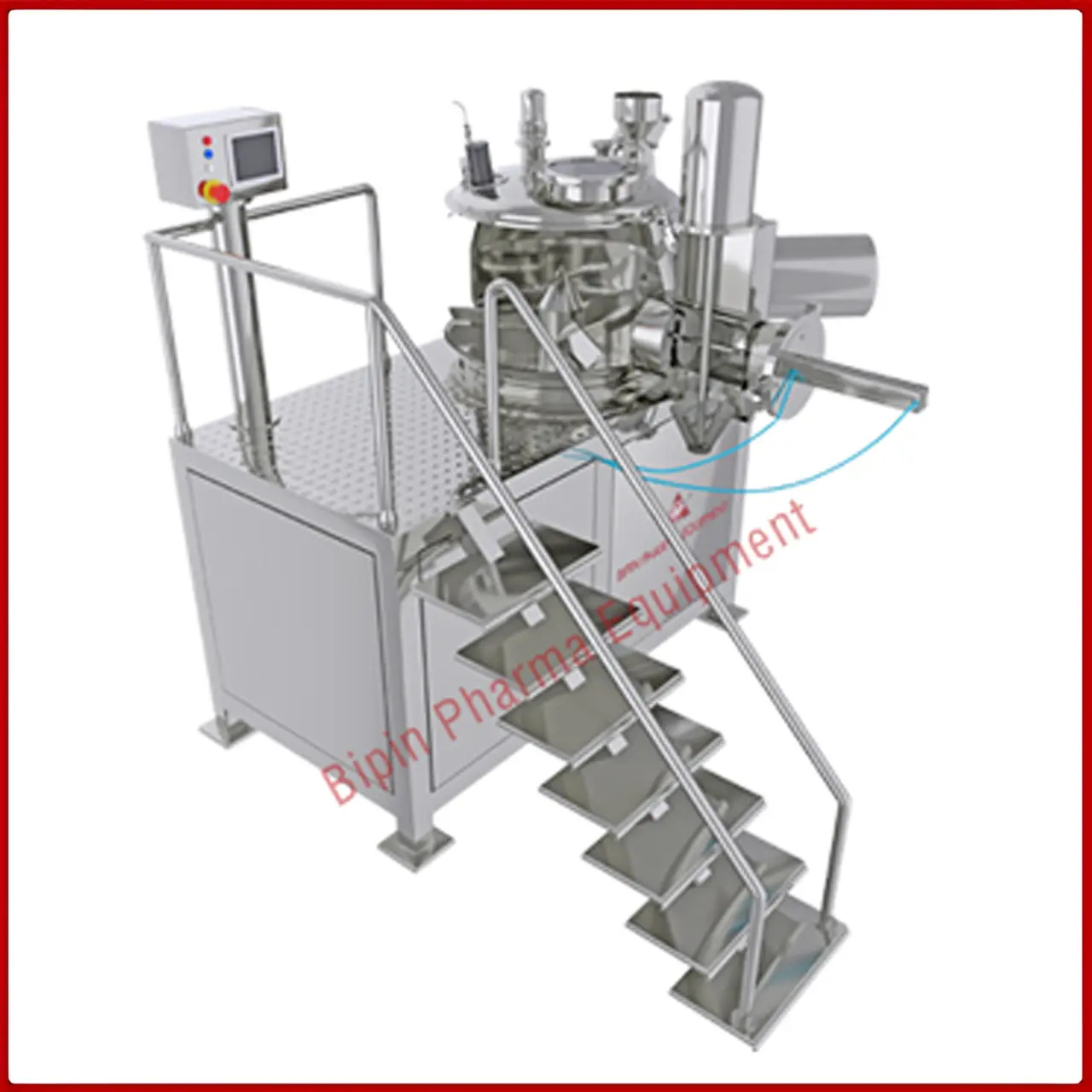
Tablets (wet granulation)RMG, FBD, Multi Mill, Vibro Sifter, Blender, IPC Bin, Tablet Press, Coating PanControlled environment; temp 20–25°C; RH 40–60%
Tablets (direct compression)Vibro Sifter, Blender, IPC Bin, Tablet Press, Coating PanControlled environment; temp 20–25°C; RH 40–60%
Hard gelatin capsulesVibro Sifter, Blender, IPC Bin, Capsule Filling MachineControlled environment; RH 40–60%
Oral liquid syrups / solutionsSyrup Plant, Sparkler Filter Press, Zero Hold Up Filter Press, Filling MachineGrade D (oral liquid area); temp 20–25°C
Creams, ointments, gelsCream & Lotion System, Colloid Mill, Paste Kettle, Tube/Jar Filling MachineGrade D (semi-solid area); temp 20–25°C
API (chemical synthesis)SS Reactor, Condenser, Receiver, ANFD, VTDChemical processing area; ATEX-classified
Sterile injectables (aseptic)MCD Plant (WFI), Sterile Mfg Vessel, Zero Hold Up Filter Press, Filling Machine (RABS/Isolator)Grade A/B/C/D classified cleanrooms

Master Equipment Checklist: Tablet Manufacturing Plant

Tablet Plant — Core Equipment Checklist

  • Dispensing booth (negative pressure) with calibrated weighing balances
  • Vibro Sifter — for raw material screening and post-mill granule classification
  • Rapid Mixer Granulator (RMG) — for wet granulation
  • Paste Kettle — for binder preparation
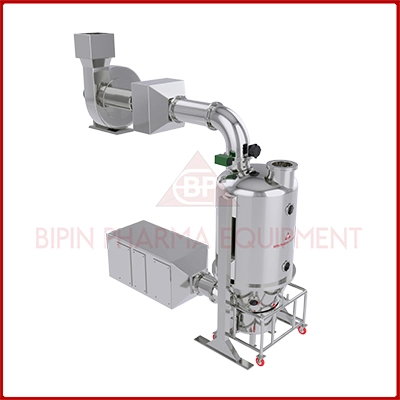
  • Fluid Bed Dryer (FBD) — for wet granule drying
  • Multi Mill — for granule sizing after drying
  • Double Cone Blender — for lubricant and final blending
  • Octagonal Blender — alternative blender for cohesive formulations
  • IPC Bin — for closed transfer of blended granules to tablet press
  • Rotary Tablet Press — for compression
  • Tablet Dedusting and Metal Detection Unit — inline with tablet press
  • Coating Pan — for film or sugar coating (if applicable)
  • Blister Packing / Bottle Filling Machine — for primary packaging
  • Carton Erecting, Labelling, and Coding Machine — for secondary packaging
  • Checkweigher and Metal Detector — for final pack inspection

Master Equipment Checklist: Oral Liquid Manufacturing Plant

Oral Liquid Plant — Core Equipment Checklist

  • Purified Water generation system (pre-filtration, softening, RO, UV, EDI)
  • Syrup Manufacturing Plant — Sugar Dissolving Vessel, Manufacturing Vessel, Storage Vessel
  • Oral Liquid Systems — integrated liquid oral manufacturing system
  • Paste Kettle — for sugar syrup or gum solution preparation
  • Sparkler Filter Press — for primary bulk clarification and filtration
  • Zero Hold Up Filter Press — for final polishing filtration; maximum product recovery
  • Liquid filling machine — for filling syrups into bottles / containers
  • Capping / sealing machine — for ROPP caps, child-resistant closures
  • Labelling and coding machine — for primary and secondary labels
  • Bottle washing and drying machine — for pre-filled bottle preparation

Master Equipment Checklist: Cream, Lotion & Semi-Solid Manufacturing Plant

Cream & Lotion Plant — Core Equipment Checklist

  • Purified Water generation system
  • Cream & Lotion Manufacturing System — Water Phase Vessel, Oil Phase Vessel, Manufacturing Vessel (with high-shear homogeniser), Storage Vessel
  • Paste Kettle — for melting and pre-blending waxes and bases
  • Colloid Mill — for fine particle dispersion in cream/ointment base
  • Sparkler Filter Press — for aqueous phase clarification
  • Tube / jar filling machine — for filling cream and ointment into primary containers
  • Tube sealing machine (aluminium or laminate tube sealing)
  • Labelling and coding machine

Master Equipment Checklist: API / Chemical Manufacturing Plant

API / Chemical Plant — Core Equipment Checklist

  • SS Reactor — jacketed stirred tank reactor for synthesis and crystallisation
  • Shell & Tube Condenser — for reflux and distillation vapour management
  • Box Type Condenser — for smaller reactors or moderate duty applications
  • Receiver — for distillate collection and solvent recovery
  • Agitated Nutsche Filter Dryer (ANFD) — for API isolation, cake washing, and vacuum drying
  • Vacuum Tray Dryer — for secondary drying or heat-sensitive API drying
  • Sparkler Filter Press — for mother liquor polishing and clarification
  • Solvent recovery system — distillation column for solvent redistillation and reuse
  • Scrubber / vent treatment system — for flammable and toxic vapour control
  • ATEX-rated nitrogen supply and distribution system

Master Equipment Checklist: Sterile Injectable Manufacturing Plant

Sterile Injectable Plant — Core Equipment Checklist

  • Multi Column Distillation Plant (WFI Generator) — 3 to 9 effects; sized for facility WFI demand
  • WFI storage tank and hot distribution loop (SS316L electropolished; maintained >80°C)
  • Sterile Manufacturing Vessel — SIP/CIP capable; SS316L electropolished; for bulk solution compounding
  • Clean Steam Generator — WFI-fed; for SIP of vessels and autoclaving of materials
  • Autoclave — for sterilisation of stoppers, equipment, and terminally sterilised products
  • Zero Hold Up Filter Press — for pre-filtration of bulk solution before sterilising membrane filter
  • Sterilising filtration system — validated 0.2 µm membrane filter assembly (SIP-compatible)
  • Vial washing, depyrogenation, and drying tunnel
  • Aseptic filling and stoppering machine (under RABS or isolator; Grade A)
  • Capping / crimping machine
  • Vial inspection machine (100% automated or manual)
  • Lyophiliser (freeze dryer) — if lyophilised products are manufactured
  • Environmental monitoring system — continuous particle counters; viable air samplers

GMP Facility Requirements by Dosage Form (India — Schedule M)

Dosage FormMinimum Dedicated Areas RequiredAir HandlingWater Quality
Tablets / CapsulesDispensing, granulation, drying, blending, compression, coating, packaging, QC lab, storesTemperature (20–25°C), humidity (40–60% RH), pressure differential between areasPurified Water for equipment cleaning; potable water for other uses
Oral LiquidsDispensing, manufacturing, filtration, filling, packaging, QC lab, storesGrade D controlled environment; temp 20–25°C; positive pressurePurified Water (IP/USP specification) at point of use
Creams / OintmentsDispensing, manufacturing (with HVAC), filling, packaging, QC, storesGrade D; temp 20–25°C; humidity control (for stability)Purified Water for manufacturing and cleaning
API (chemical synthesis)Synthesis area (ATEX-classified), ANFD area, drying area, testing lab, solvent storageSolvent vapour extraction; ATEX Zone 1/2 electrical classification; LEV systemsPurified Water for final API washing; DM water for process use
Sterile InjectablesGrade A/B/C/D cleanrooms; WFI generation; clean steam; filling suite; autoclave; inspectionHEPA-filtered; defined air change rates per grade; differential pressure monitoring; continuous EMWFI (IP/BP/USP) for all product-contact operations and equipment rinsing

Key Utility Requirements for Pharmaceutical Manufacturing Plants

Standard Utility Requirements for a Pharmaceutical Plant

  • Purified Water (PW) system: Multi-stage treatment (pre-filtration, softening, carbon filter, RO, UV, EDI); recirculating distribution loop; daily monitoring per IP/BP/USP; required for all dosage forms
  • Water for Injection (WFI): Generated by Multi Column Distillation Plant; mandatory for sterile product manufacturing; stored and distributed at >80°C; daily monitoring
  • Pharmaceutical-grade steam (clean steam): Generated from PW or WFI-quality feed water; required for SIP of sterile manufacturing vessels and autoclaving; must be non-condensing and pyrogen-free
  • Compressed air: Oil-free; dried to dew point <-40°C; filtered to <0.01 µm; used for pneumatic equipment, product transfer, and as process air in FBD and Coating Pan
  • Chilled water: For cooling in syrup vessels, reactors, condensers, and HVAC cooling coils; typically 6–12°C supply temperature
  • HVAC system: HEPA-filtered air; temperature and humidity control; cleanroom pressure differentials; sized per area and classification requirements
  • Electrical supply: Stable power with UPS backup for critical systems (HVAC, WFI, monitoring); ATEX-rated wiring in solvent-handling areas
  • Nitrogen gas: For inerting of oxygen-sensitive products in vessels, reactors, and ANFD; pharmaceutical-grade purity (≥99.99% N₂)
  • Effluent treatment: ETP for treatment of pharmaceutical process effluent before discharge; mandatory for environmental compliance

Regulatory Approvals Timeline for a New Pharmaceutical Plant in India

Approval / LicenceIssuing AuthorityTypical TimelineRequirement
Drug Manufacturing Licence (Form 25 / Form 28)State Drug Authority (SDA) / CDSCO6–18 months from applicationMandatory for all pharma manufacturing in India
WHO GMP CertificateWHO / CDSCO (National GMP Certification Scheme)12–24 months post licenceRequired for exports to WHO-prequalified markets (Africa, Southeast Asia)
US FDA Registration (DUNS / Drug Establishment)US FDAOnline registration; site inspection within 2 yearsRequired for US export; facility must be FDA-inspected before product approval
EU GMP CertificationEU National Competent Authorities (EMA network)12–24 months; depends on inspection slot availabilityRequired for export to EU member states
Factory Licence (Factories Act)State Labour Department2–4 monthsMandatory for all manufacturing establishments in India
Pollution Control Consent (CTE/CTO)State Pollution Control Board3–6 monthsMandatory; pharmaceutical plants are classified as "Red" category
Fire NOCState Fire Department2–4 monthsMandatory; particularly important for solvent-handling API and coating plants

Frequently Asked Questions (FAQ)

How long does it take to set up a pharmaceutical manufacturing plant in India from scratch?
Setting up a pharmaceutical manufacturing plant from greenfield to first commercial batch typically takes 18 to 36 months, depending on the dosage form complexity, facility size, and regulatory market target. A simple oral solid dosage (tablet/capsule) facility in India can be set up in 18–24 months. An oral liquid plant typically takes 18–24 months. A sterile injectable facility takes 24–36 months or longer due to the complexity of cleanroom construction, equipment qualification, and sterile process validation. API plants with chemical synthesis fall in the 24–30 month range. The critical path is usually the regulatory licence — starting the Drug Manufacturing Licence application process as early as possible is essential.
What is the minimum investment required to set up a tablet manufacturing plant in India?
A basic Schedule M-compliant tablet manufacturing plant (wet granulation route, 100–200 million tablets per year capacity, domestic India market) requires a minimum investment of approximately ₹2–5 crore for equipment, ₹1–3 crore for facility construction and fitout (excluding land), ₹50 lakh–1 crore for utilities (PW, HVAC, compressed air), ₹25–50 lakh for QC laboratory instruments, and ₹50 lakh–1 crore for licence applications, validation, and launch costs. A total greenfield investment of ₹5–10 crore (equipment + facility + utilities + validation) is a realistic minimum for a functional Schedule M-compliant tablet plant in India. Export-oriented plants targeting WHO GMP or US FDA markets require significantly higher investment — typically ₹15–40 crore — due to additional facility and documentation requirements.
What equipment is absolutely mandatory for a Schedule M-compliant oral solid dosage (tablet) plant in India?
Schedule M (Revised) of the Drugs and Cosmetics Rules mandates specific equipment for each dosage form. For an oral solid dosage (tablet) facility, the mandatory equipment includes: a dispensing area with calibrated weighing balances; Vibro Sifter; granulation equipment (Rapid Mixer Granulator or equivalent); drying equipment (Fluid Bed Dryer or Tray Dryer); sizing equipment (Multi Mill); blending equipment (Double Cone Blender or equivalent); rotary tablet press; in-process testing instruments (hardness tester, thickness gauge, friability tester, disintegration apparatus); metal detector; and primary packaging equipment. For coated tablet products, a Coating Pan is mandatory.
How do I choose between a Fluid Bed Dryer, Tray Dryer, and Vacuum Tray Dryer for my new tablet plant?
The choice depends on your product portfolio and production scale. The Fluid Bed Dryer (FBD) is the preferred choice for high-volume tablet manufacturing — it is fast (60–120 min drying cycles), uniform, and handles large batches efficiently. It is the right choice for most conventional tablet formulations. The Tray Dryer is a lower-cost alternative suitable for small batches, pilot-scale work, or heat-stable granules — it has longer cycle times (4–8 hours) and more manual handling. The Vacuum Tray Dryer is essential when drying heat-sensitive APIs (degradation below 60°C) or when organic granulation solvents are used that require containment and recovery. Most established tablet plants have an FBD as their primary dryer and a VTD or Tray Dryer as a secondary unit for special products.
Can the same plant manufacture both oral solid dosage and oral liquid products?
Yes, a multi-product pharmaceutical plant can manufacture both oral solid dosage forms (tablets, capsules) and oral liquid products (syrups, solutions) — but they require separate, dedicated manufacturing areas with their own HVAC systems, personnel flows, and equipment. Both dosage form areas must be covered under the same Drug Manufacturing Licence, specifying the products and dosage forms to be manufactured at the site. The oral liquid manufacturing area requires Grade D environmental classification, Purified Water at the point of use, and dedicated liquid manufacturing equipment (Syrup Manufacturing Plant, filter presses). The granulation and tablet area is a controlled environment separate from the liquid area. QC laboratory, raw material stores, and finished goods stores can be shared between the two dosage form areas in a well-designed multi-product facility.

Conclusion

Setting up a pharmaceutical manufacturing plant is a major, multi-year undertaking — but with the right strategic planning, facility design, equipment selection, and regulatory approach, it is an eminently achievable project that creates a long-term commercial asset serving your business for decades. The equipment checklists in this guide provide a solid starting framework for each dosage form — adapt them to your specific product portfolio, batch sizes, and regulatory market requirements.

As a full-range GMP pharmaceutical equipment manufacturer, supplier, and exporter, we are uniquely positioned to supply the complete equipment range for your new pharmaceutical plant — regardless of the dosage form. From Rapid Mixer Granulators and Fluid Bed Dryers for tablet plants, to Syrup Manufacturing Plants and Sparkler Filter Presses for oral liquid plants, to SS Reactors and ANFDs for API plants, to Multi Column Distillation Plants and Sterile Manufacturing Vessels for injectable facilities — we supply it all, with complete GMP documentation, FAT, and full after-sales support.

Planning Your Pharmaceutical Plant? Let Us Help.

Speak with our technical team for expert guidance on equipment selection, capacity planning, and complete plant configuration for your new facility.

Send Enquiry Contact Us

Related Article Pages