Role of Receivers in Pharma Reactor Systems: Functions, Design & Applications
In pharmaceutical API synthesis and chemical manufacturing, the reactor system is always more than just the reactor vessel itself. Every complete reactor installation includes a condenser for vapour management — and critically, a Receiver vessel to collect, measure, and manage the condensed liquid that exits the condenser. While the Receiver is often considered an auxiliary component, it performs several indispensable functions that directly impact process control, solvent recovery, product quality, vacuum system protection, and regulatory compliance.
This guide provides a comprehensive overview of the Receiver in pharmaceutical reactor systems — covering what it is, its multiple functions, construction and design features, how it integrates with the reactor and condenser, different operating modes, sizing principles, and GMP requirements.
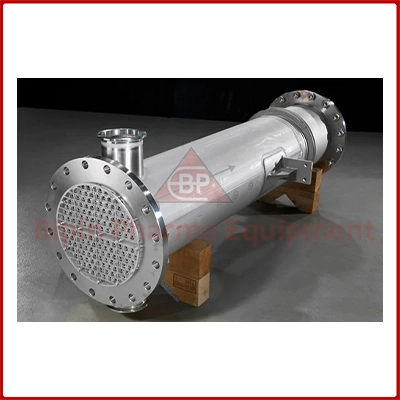
We are a leading manufacturer, supplier, and exporter of Receivers, Shell & Tube Condensers, Box Type Condensers, and SS Reactors for pharmaceutical and chemical manufacturers in India and worldwide.
What is a Receiver in a Pharmaceutical Reactor System?
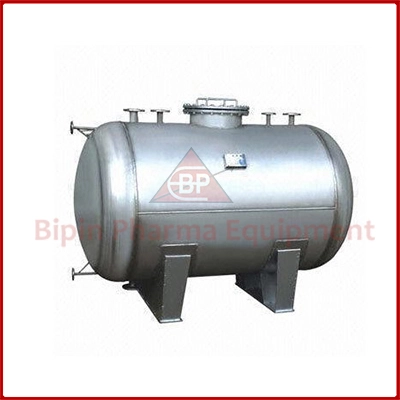
A Receiver (also called a Distillate Receiver, Condensate Receiver, or Solvent Receiver) is a pressure-and-vacuum-rated stainless steel vessel positioned downstream of the condenser in a pharmaceutical or chemical reactor system. It collects the condensed liquid — solvent, distillate, or reaction by-product — that exits the condenser after the vapour from the reactor has been condensed back to liquid form.
The Receiver sits between the condenser outlet and the vacuum pump (or the reactor reflux inlet) and serves as the critical junction point for all vapour management operations in the reactor system. Without a properly designed and sized Receiver, solvent distillation cannot be measured, vacuum pump protection cannot be ensured, solvent recovery cannot be performed, and reflux ratio cannot be controlled.
The Six Core Functions of a Receiver in a Reactor System
Function 1: Distillate Collection and Volume Measurement
During solvent distillation, solvent swap, and concentration operations, the reactor jacket heats the reaction mass, evaporating the solvent. The solvent vapour rises to the condenser where it is condensed back to liquid — and this liquid distillate flows by gravity into the Receiver. The Receiver is equipped with a calibrated sight glass and dip tube (or level transmitter) so that the operator can monitor the volume of distillate collected in real time.
Distillate volume measurement in the Receiver is the primary method for confirming the completion of distillation and solvent swap operations. For example, if a solvent swap requires removing 200 litres of old solvent from the reactor, the operator confirms completion when the Receiver contains 200 litres of distillate — and this is documented in the batch record as the distillation endpoint criterion.
Function 2: Solvent Recovery and Recycling
Pharmaceutical synthesis uses large quantities of organic solvents — ethanol, IPA, acetone, ethyl acetate, toluene, DMF, and others. These solvents are expensive, and in a GMP-compliant API facility, they must be either recovered for reuse or safely disposed of per environmental regulations. The Receiver collects these solvents in pure or near-pure condition (having been evaporated from the reaction mass and condensed), making them available for:
- Direct reuse in the same or subsequent reaction steps if purity is acceptable (verified by GC or density testing)
- Transfer to a central solvent recovery system for redistillation and purification
- Transfer to solvent waste drums for licensed disposal in compliance with environmental permits
Systematic solvent recovery via the Receiver dramatically reduces raw material costs, reduces solvent waste disposal costs, and supports the environmental sustainability targets of pharmaceutical manufacturing operations.
Function 3: Reflux Ratio Control
In reflux operations, the Receiver acts as a buffer vessel that enables precise control of the reflux ratio — the ratio of condensate returned to the reactor versus the condensate collected as distillate. A reflux valve (or three-way valve) downstream of the condenser outlet directs condensate either back to the reactor (reflux) or into the Receiver (distillate). By adjusting the valve position, operators can precisely set the reflux ratio (e.g., 5:1 reflux means 5 parts returned to reactor for every 1 part collected in Receiver), which is a critical process parameter in many pharmaceutical synthesis operations where reflux controls reaction temperature, solvent concentration, and product formation rate.
Function 4: Vacuum Pump Protection
This is one of the most critical safety functions of the Receiver in vacuum reactor operations. When a reactor is operated under vacuum for vacuum distillation or vacuum-assisted reactions, the vacuum pump generates the sub-atmospheric pressure in the system. If the condenser fails to condense all the solvent vapour (due to high vapour load, insufficient cooling, or condenser fouling), uncondensed solvent vapour could reach the vacuum pump — causing liquid carry-over into the pump, which can cause catastrophic mechanical damage and, for flammable solvents, create a fire or explosion hazard.
The Receiver is positioned between the condenser and the vacuum pump as a liquid trap. Any uncondensed solvent that bypasses the condenser condenses in the cooler Receiver vessel or is captured by the liquid already in the Receiver — preventing it from reaching the vacuum pump. This liquid trap protection is a mandatory safety and equipment protection design requirement for all vacuum reactor systems handling flammable or toxic solvents.
Function 5: Process Endpoint Confirmation
The Receiver provides an in-process endpoint indicator for several reactor operations. During solvent removal distillation, a steady-state distillate flow rate to the Receiver (as visible in the sight glass) indicates active evaporation; a sudden cessation of distillate flow (sight glass level stops rising) indicates that all evaporatable solvent has been removed — a key endpoint signal. During vacuum drying of the ANFD or Vacuum Tray Dryer connected to the vacuum system, the cessation of condensate accumulation in the Receiver confirms that residual solvent has been completely removed from the product.
Function 6: Intermediate Solvent Storage
In multi-step synthesis processes where the same solvent is used in multiple reaction steps, the Receiver provides temporary, closed intermediate storage for recovered solvent between use cycles. This avoids the need for unnecessary transfer to bulk solvent drums and re-dispensing — saving handling time, reducing solvent exposure risk, and minimising transfer losses. The Receiver is designed to hold the recovered solvent safely under nitrogen blanket until it is needed for the next process step.
Key Components of a Pharmaceutical Receiver Vessel
| Component | Function | Specification |
|---|---|---|
| Vessel shell and heads | Contains the collected condensate under pressure or vacuum conditions | SS316L; pressure and vacuum rated (FV to 3.5 bar); DIN/ASME head design |
| Inlet nozzle (from condenser) | Receives condensate flow from condenser outlet by gravity | Top or side entry; sized for condensate flow rate |
| Sight glass (calibrated) | Enables operator to visually monitor condensate volume in real time | Borosilicate glass tube with SS316L body; graduated markings in litres |
| Level transmitter (optional) | Provides continuous, electronic level measurement for automated systems | Magnetic float or guided wave radar type; 4-20 mA output |
| Reflux outlet (to reactor) | Returns condensate to reactor for reflux operations; controlled by reflux valve | Bottom or side outlet; SS316L; manual or automatic valve |
| Distillate outlet (to recovery) | Discharges collected distillate to solvent recovery system or waste drums | Bottom outlet; SS316L; manual or automatic valve |
| Vacuum connection (to vacuum pump) | Connects Receiver to vacuum system; provides vapour trap protection for vacuum pump | Top nozzle; sized for vacuum system pipe diameter; with demister pad |
| Nitrogen inlet | Admits dry nitrogen to blanket the vapour space; prevents oxidation and explosion risk | Top nozzle; with check valve and flow indicator |
| Vent with flame arrestor | Safe venting of non-condensable gases; prevents flashback into vessel for flammable solvents | Top vent; flame arrestor rated for flammable solvent service |
| Pressure gauge and vacuum gauge | Monitors operating pressure/vacuum inside the Receiver | SS316L bourdon tube gauges; calibrated; with isolation valves |
| Temperature sensor | Monitors temperature of condensate in Receiver | PT100 RTD; SS316L pocket; calibrated |
| Drain valve | Complete draining of Receiver for cleaning; gravity drain | Full-bore bottom drain valve; SS316L |
| Heating jacket (optional) | Prevents solidification of high-melting point condensates | Full or half-pipe jacket; hot water circulation |
Key Features of Pharmaceutical Receiver Vessels
- SS316L stainless steel construction throughout all product-contact surfaces
- Pressure and vacuum rated — typically Full Vacuum (FV) to 3.5 bar; higher ratings available on request
- Calibrated sight glass for accurate visual volume measurement during operations
- Nitrogen blanketing system for safe handling of oxygen-sensitive or flammable condensates
- Flame arrestor on vent for flammable solvent service (ATEX-compliant design)
- Complete drainability — sloped base and full-bore drain valve; no product hold-up after draining
- Demister pad at vacuum connection nozzle to prevent liquid carry-over into vacuum line
- Separate reflux and distillate outlet nozzles for flexible operation modes
- ATEX-rated design with earthing and bonding lugs for flammable solvent environments
- Available in capacities from 25 litres to 2,000 litres to match all reactor system sizes
- Optional: load cells for gravimetric measurement; heating jacket for high-melting condensates
How the Receiver Integrates into the Complete Reactor System
The Receiver is the third component in the reactor–condenser–receiver trio. Understanding the complete flow path through this integrated system for each operation mode is essential for correct installation and process operation:
| Operation | Flow Path Through System | Receiver Function |
|---|---|---|
| Total reflux | Reactor → vapour line → Condenser → condensate → reflux valve (open) → back to Reactor | On standby or receives small overflow; reflux valve fully open to reactor |
| Atmospheric distillation | Reactor (heated) → vapour → Condenser → condensate → reflux valve (closed) → Receiver | Collects all distillate; sight glass shows volume accumulation; endpoint when flow stops |
| Partial reflux distillation | Reactor → vapour → Condenser → condensate → split valve → part to Reactor (reflux) + part to Receiver | Collects distillate fraction; operator adjusts valve to control reflux ratio |
| Vacuum distillation | Reactor (under vacuum, heated) → vacuum vapour → Condenser → condensate → Receiver; Receiver → vacuum pump | Collects vacuum distillate; liquid trap prevents vapour reaching vacuum pump |
| Solvent swap (new for old) | Reactor (heated) → old solvent vapour → Condenser → condensate → Receiver (old solvent collected); new solvent charged to Reactor separately | Collects old solvent; volume confirms swap completion; old solvent sent to recovery |
| ANFD/VTD drying via shared vacuum | ANFD or VTD → solvent vapour → Condenser → condensate → Receiver; Receiver → vacuum pump | Collects drying solvent; cessation of condensate flow confirms drying endpoint |
Receiver Sizing Guide for Pharmaceutical Reactor Systems
Correct Receiver sizing is important for safe and efficient reactor system operation. An undersized Receiver overflows during distillation operations, creating a safety hazard. An oversized Receiver wastes capital cost and floor space. Key sizing principles:
| Reactor Capacity | Recommended Receiver Capacity | Sizing Basis |
|---|---|---|
| 50–200 L reactor | 25–100 L Receiver | Sized for maximum single distillation charge volume |
| 200–500 L reactor | 100–300 L Receiver | Sized for typical solvent removal volume per batch |
| 500–1,000 L reactor | 300–600 L Receiver | Typically 50–75% of reactor working volume |
| 1,000–5,000 L reactor | 500–2,500 L Receiver | Based on maximum distillation duty per batch cycle |
| Multi-reactor system | Dedicated Receiver per reactor or shared Receiver with manifold | Individual sizing per reactor or total manifold duty calculation |
Additional sizing considerations include: the Receiver must never be more than 80% full during normal operation (20% vapour space above liquid for safe pressure management); for vacuum service, the Receiver must be rated for full vacuum (FV) with adequate wall thickness; for flammable solvent service, the Receiver must be ATEX-rated and nitrogen-blanketed.
Receiver Applications Across Different Pharmaceutical Manufacturing Contexts
In API Synthesis Reactors
In a pharmaceutical API synthesis train, the Receiver is a mandatory component of every reactor setup. During multi-step synthesis, the Receiver collects solvent distillates between reaction steps, controls reflux ratios during reaction, and enables solvent swap operations that replace reaction solvents with crystallisation or washing solvents between steps. Batch records in GMP API facilities must document all Receiver volumes to confirm process endpoints and solvent balances.
In Vacuum Tray Dryer and ANFD Systems
The Receiver plays the same vacuum pump protection role when connected to a Vacuum Tray Dryer or ANFD vacuum drying system. Solvent vapours driven off the product cake during vacuum drying are condensed in the condenser and collected in the Receiver. ICH Q3C residual solvent compliance depends on collecting and measuring these solvents — the Receiver volume data provides the primary in-process evidence that residual solvent removal is progressing to specification.
In Multi-Column Distillation Plants (WFI Generation)
In Multi Column Distillation Plants used for Water for Injection (WFI) generation, Receivers are used as WFI collection vessels between distillation columns. Each column's condensate is collected in a receiver/collector vessel before being fed to the next column or to the WFI storage tank. In this application, the Receiver must be fabricated in SS316L with electropolished surfaces and must be qualified as part of the WFI generation system.
GMP Requirements for Pharmaceutical Receiver Vessels
- All product-contact surfaces must be SS316L with Ra ≤ 0.8 µm surface finish; electropolished Ra ≤ 0.4 µm for sterile API and WFI applications
- Receiver must be pressure tested (hydrostatic) on the shell side before commissioning; test certificate must be maintained in equipment file
- Material test certificates (MTCs) for SS316L shell, heads, and nozzles required for GMP documentation
- Sight glass must be calibrated and calibration certificate maintained; re-calibration required after any repair or replacement
- Nitrogen blanketing system must be validated for purity (O₂ ≤ 2% v/v) and integrity for flammable solvent service
- Flame arrestor must be rated and certified for the specific solvent service; inspection and replacement schedule required
- ATEX certification required for all electrical components (level transmitters, temperature sensors) in flammable solvent environments
- Earthing and bonding connections must be installed and tested for continuity to prevent static electricity discharge
- Cleaning procedure must be validated; TOC or swab sampling to confirm carryover below acceptable limits before next product campaign
- Receiver volume data must be recorded in batch records as part of process endpoint documentation for distillation and drying operations
Frequently Asked Questions (FAQ)
Conclusion
The Receiver is far more than a simple collection vessel in a pharmaceutical reactor system. It performs six distinct, indispensable functions — distillate collection and measurement, solvent recovery, reflux ratio control, vacuum pump protection, process endpoint confirmation, and intermediate solvent storage — that are each critical to process control, product quality, operational safety, and regulatory compliance.
A correctly designed, properly sized, and GMP-compliant Receiver, working in seamless integration with the SS Reactor and the condenser (Shell & Tube or Box Type), forms a complete, safe, and efficient vapour management system for pharmaceutical API manufacturing.
We manufacture and export GMP-compliant Receivers in a wide range of capacities and pressure ratings for pharmaceutical API, chemical, and specialty chemical manufacturers across India and internationally. All Receivers are supplied with full material traceability, pressure test certificates, and documentation support.
Enquire About Our Receivers & Complete Reactor Systems
Speak with our technical team for expert guidance on Receiver sizing, design specification, and complete reactor system configuration.
Send Enquiry Contact Us