Sterile Manufacturing in Pharma: Equipment, Process & GMP Guidelines
Sterile pharmaceutical manufacturing is the most technically demanding, heavily regulated, and quality-critical segment of the entire pharmaceutical industry. Every product manufactured in a sterile facility — injectable drugs, intravenous infusions, ophthalmic preparations, lyophilised biologics, and sterile inhalation products — is administered directly into the body or onto sensitive tissues, bypassing the body's natural defence barriers. A single sterility failure can cause sepsis, endotoxin shock, or patient death. This is why sterile manufacturing demands the highest standards of facility design, equipment quality, process validation, environmental monitoring, and GMP compliance in all of pharmaceutical production.
This comprehensive guide covers the complete landscape of sterile pharmaceutical manufacturing — from cleanroom classifications and sterile manufacturing processes to key equipment, critical utilities (WFI, Clean Steam), environmental monitoring, and the GMP regulatory framework governing sterile production.
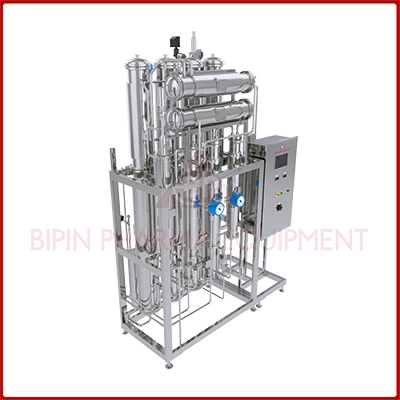
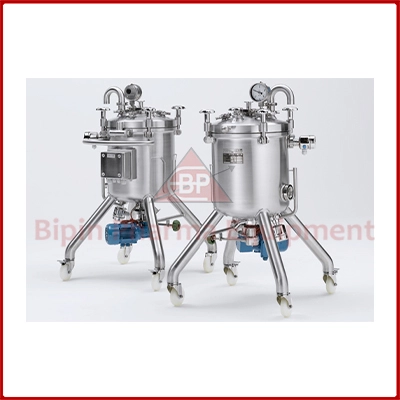
We are a leading manufacturer, supplier, and exporter of sterile preparation equipment including Sterile Manufacturing Vessels and Multi Column Distillation Plants for pharmaceutical manufacturers in India and worldwide.
Types of Sterile Pharmaceutical Products
| Product Category | Route of Administration | Sterility Requirement | Examples |
|---|---|---|---|
| Large Volume Parenterals (LVP) | Intravenous infusion | SAL 10⁻⁶ (terminally sterilised) | IV saline, dextrose, Ringer's lactate |
| Small Volume Parenterals (SVP) | Intravenous, intramuscular, subcutaneous injection | SAL 10⁻⁶ or aseptic fill | Antibiotics, vaccines, insulin, biologics |
| Ophthalmic preparations | Topical (eye) | Sterile; endotoxin-free | Eye drops, ophthalmic ointments, contact lens solutions |
| Lyophilised products | IV / IM after reconstitution | SAL 10⁻⁶ or aseptic | Lyophilised antibiotics, proteins, vaccines |
| Biologics and biosimilars | Subcutaneous / intravenous | Aseptic processing (heat-sensitive) | mAbs, enzymes, hormones, blood products |
| Sterile inhalation products | Inhalation (lung) | Sterile; low bioburden | Nebuliser solutions, sterile inhalation concentrates |
Two Routes to Achieving Sterility in Pharmaceutical Manufacturing
1. Terminal Sterilisation
Terminal sterilisation involves filling the product into its final container (vial, ampoule, IV bag) under controlled conditions and then sterilising the sealed product by applying a validated sterilisation method — typically steam sterilisation (autoclaving) at 121°C for a validated time, or dry heat sterilisation, or gamma irradiation. Terminal sterilisation achieves a Sterility Assurance Level (SAL) of 10⁻⁶ — meaning fewer than 1 in 1,000,000 units is non-sterile after the sterilisation process.
Terminal sterilisation is the preferred route for products that can withstand the sterilisation conditions — primarily aqueous solutions and thermostable APIs. It provides the highest sterility assurance because the entire filled container is subjected to the sterilisation treatment, providing a complete kill of any residual bioburden.
2. Aseptic Processing (Aseptic Fill-Finish)
Aseptic processing is used for products that cannot be terminally sterilised because the API, excipients, or container system are too heat-sensitive to withstand autoclaving. In aseptic processing, each component of the sterile product is sterilised separately before assembly:
- The bulk drug solution is sterilised by 0.2 µm membrane filtration
- The containers (vials, ampoules) are depyrogenated by dry heat (≥250°C for ≥30 minutes)
- Closures (rubber stoppers) are sterilised by autoclaving
- Filling and stoppering take place in a Grade A (ISO 5) cleanroom environment under laminar airflow, with no contamination-eliminating sterilisation step after filling
Aseptic processing relies entirely on the prevention of contamination during filling — it has no final kill step. This makes it technically more challenging and riskier than terminal sterilisation, requiring the highest levels of cleanroom control, personnel discipline, environmental monitoring, and equipment design.
Cleanroom Classifications for Sterile Manufacturing
Sterile pharmaceutical manufacturing requires classified cleanroom environments with controlled airborne particle counts and microbial limits. The EU GMP Annex 1 (2022 revision) classifies cleanrooms into Grades A, B, C, and D:
| Cleanroom Grade | ISO Class Equivalent | Max Particles ≥0.5 µm /m³ (at rest) | Max Particles ≥0.5 µm /m³ (in operation) | Typical Use |
|---|---|---|---|---|
| Grade A | ISO 5 | 3,520 | 3,520 | Aseptic fill zone; critical open-product areas; under RABS or isolator |
| Grade B | ISO 5 (at rest); ISO 7 (in operation) | 3,520 | 352,000 | Background environment for Grade A; aseptic gowning area |
| Grade C | ISO 7 (at rest); ISO 8 (in operation) | 352,000 | 3,520,000 | Bulk solution preparation for aseptic filtration; less critical steps |
| Grade D | ISO 8 | 3,520,000 | Not defined | Less critical support activities; non-sterile product manufacture; gowning for C areas |
Key Equipment in Sterile Pharmaceutical Manufacturing
1. Sterile Manufacturing Vessel
The Sterile Manufacturing Vessel is the primary processing vessel for sterile bulk solution preparation in pharmaceutical injectable and ophthalmic manufacturing. It is used for dissolving APIs and excipients in Water for Injection (WFI), adjusting pH, performing in-process tests, and holding the sterile-filtered bulk prior to filling.
Key Features of Sterile Manufacturing Vessel
- SS316L stainless steel construction throughout all product-contact surfaces
- Electropolished internal surfaces (Ra ≤ 0.4 µm) — mandatory for sterile applications
- Jacketed design for temperature control (heating and cooling)
- Variable-speed agitator with hygienic mechanical seal — no dead zones
- SIP (Sterilise-in-Place) compatible — validated steam sterilisation in place without dismantling
- CIP (Clean-in-Place) spray balls for automated validated cleaning
- All connections via Tri-Clamp hygienic fittings — no threaded connections on sterile product side
- 0.2 µm vent filter on all open connections (breather filter) to maintain vessel sterility
- Pressure-rated and vacuum-rated for SIP and nitrogen transfer operations
- pH probe, temperature probe, and conductivity probe connections for in-process testing
- Nitrogen overlay capability to protect oxygen-sensitive sterile products
- Available in capacities from 50 L to 5,000 L; custom configurations available
2. Multi Column Distillation Plant (WFI Generator)
The Multi Column Distillation Plant is the primary WFI generation system for sterile manufacturing. It produces endotoxin-free, sterile Water for Injection by multi-effect distillation — providing the critical WFI utility that is the solvent, diluent, and rinse water for all sterile product manufacturing and equipment cleaning operations.
3. Sterilising-Grade Membrane Filter System
For aseptic processing, the bulk drug solution must be sterilised by passing through a validated 0.2 µm (absolute) sterilising-grade membrane filter. The filtration system must include a pre-filter to protect the sterilising filter from premature plugging, and both pre-filter and sterilising filter must be integrity-tested (bubble point or diffusion flow test) before and after each filtration batch. All product-contact components must be sterilisable and the assembled system must be sterilised by SIP or autoclaving before use.
The Zero Hold Up Filter Press plays a key role in upstream filtration of sterile bulk solutions, maximising product recovery before the final 0.2 µm membrane sterilising step.
4. Clean Steam Generator
Clean Steam is a critical utility in sterile manufacturing — used for SIP (Sterilise-in-Place) of vessels, pipelines, and equipment; autoclaving of stoppers, packaging materials, and equipment; and humidification of cleanrooms. Clean Steam must be generated from WFI (or Purified Water of equivalent quality) to ensure it is free of non-volatile residues and pyrogens. Clean Steam must meet the same conductivity and endotoxin limits as WFI when condensed.
Critical Process Steps in Sterile Liquid Product Manufacturing
| Step | Operation | Cleanroom Grade | Key Control |
|---|---|---|---|
| 1 | WFI generation and distribution | WFI loop (outside classified area) | Conductivity, TOC, endotoxin, microbial count |
| 2 | Vessel SIP (Sterilise-in-Place) | Grade C area (vessel) | Steam penetration; temperature ≥121°C for validated hold time; F₀ ≥ 12 |
| 3 | Compounding — API + excipient dissolution in WFI | Grade C | pH, assay, temperature, agitation speed, dissolution time |
| 4 | pH adjustment and bulk QC sampling | Grade C | pH within specification; assay within 90–110%; clarity; colour |
| 5 | Bioburden testing of bulk (pre-filter) | QC laboratory | Bioburden ≤ 10 CFU/100 mL (typical action limit for aseptic bulk) |
| 6 | Sterilising filtration through 0.2 µm membrane | Grade A / Grade B | Filter pre-use integrity test; filtration time and pressure; post-use integrity test |
| 7 | Transfer to filling vessel under aseptic conditions | Grade A / Grade B | Closed transfer; nitrogen pressure transfer; no open product exposure |
| 8 | Vial / ampoule washing and depyrogenation | Washing in C; depyrogenation tunnel in A/B | Depyrogenation at ≥250°C for ≥30 min; residual endotoxin ≤ 0.25 EU/container |
| 9 | Aseptic filling and stoppering | Grade A (under RABS or isolator) in Grade B background | Fill weight/volume accuracy; stopper placement; headspace integrity |
| 10 | Capping / crimping | Grade A or C (post-stoppering) | Cap seal integrity; visual inspection of capped vials |
| 11 | 100% visual inspection | Grade C | Visible particle, colour, fill volume, seal defects |
| 12 | Sterility testing | Grade A / B or isolator | Membrane filtration method; 14-day incubation; no growth |
Environmental Monitoring in Sterile Manufacturing
Environmental Monitoring (EM) is a systematic programme of sampling and testing the cleanroom environment to detect and trend potential contamination sources before they affect sterile products. A comprehensive EM programme includes:
Airborne Particle Monitoring
- Continuous or periodic particle counting using calibrated optical particle counters
- Monitoring at ≥0.5 µm and ≥5.0 µm particle sizes at all critical locations
- Results trended against Grade A/B/C/D alert and action limits from EU GMP Annex 1
Viable (Microbial) Air Monitoring
- Active air sampling using impaction samplers (RCS or SAS type) at defined sampling locations and frequencies
- Settle plates exposed for defined periods at critical locations
- Results incubated, counted, and trended against cleanroom grade-specific microbial limits
Surface Monitoring
- Contact plates (RODAC plates) sampled from equipment surfaces, walls, and floors
- Glove print monitoring from personnel handling product in Grade A/B areas
- Swab sampling from difficult-to-contact surfaces
Personnel Monitoring
- Gown monitoring at exit from Grade A/B areas — contact plates on suits and gloves
- Regular monitoring of all personnel working in cleanrooms; trending of individual operator data
| Grade | Viable Air Limit (CFU/m³) | Settle Plate (CFU/plate/4hr) | Contact Plate (CFU/plate) | Glove Print (CFU/glove) |
|---|---|---|---|---|
| Grade A | < 1 | < 1 | < 1 | < 1 |
| Grade B | 10 | 5 | 5 | 5 |
| Grade C | 100 | 50 | 25 | — |
| Grade D | 200 | 100 | 50 | — |
GMP Requirements for Sterile Manufacturing
Regulatory Framework
- EU GMP Annex 1 (2022 revision) — the most comprehensive and recently updated global guidance for sterile manufacturing; mandatory for EU-regulated products
- US FDA 21 CFR Parts 210 and 211 — US GMP requirements; FDA Guidance for Industry on Aseptic Processing provides detailed expectations
- WHO GMP TRS 986 Annex 6 — WHO requirements for sterile pharmaceutical products; relevant for WHO-prequalified manufacturers
- Schedule M (India, revised) — Indian GMP requirements for sterile product manufacturing; aligned with WHO GMP guidelines
- ICH Q7 — GMP guidelines for active pharmaceutical ingredients; relevant for sterile API manufacturing
Facility and Equipment Requirements
- Sterile manufacturing areas must be dedicated and physically separated from non-sterile manufacturing
- Unidirectional (laminar) airflow at Grade A critical zones; turbulent but HEPA-filtered air in B, C, D
- Positive air pressure differentials between adjacent areas (highest pressure in most critical Grade A area)
- All product-contact surfaces in sterile areas must be SS316L with Ra ≤ 0.4 µm electropolished finish
- All equipment must be SIP-compatible — capable of being steam-sterilised in place without dismantling
- Hygienic (Tri-Clamp) fittings mandatory throughout — no threaded connections on sterile product side
- All breather filters must be hydrophobic 0.2 µm with validated integrity and validated sterilisation
Validation Requirements
- Media Fill (Process Simulation) — aseptic process validated by filling microbiological growth media instead of drug product; ≤ 1 contaminated unit in 3,000 or zero in smaller fills
- Filter validation — sterilising filters validated for bacterial retention (ASTM F838), extractables, and process compatibility
- Sterilisation validation — autoclave and SIP cycles validated with biological indicators (Geobacillus stearothermophilus BI, D-value = 1.5–2.0 min); F₀ ≥ 12 minutes for standard cycles
- Depyrogenation validation — dry heat tunnel validated for ≥3-log endotoxin reduction at operating conditions
- Cleaning validation — all product-contact equipment cleaned by validated CIP procedure; TOC and microbial swab testing confirms residuals below ACO limits
How Our Equipment Supports the Complete Sterile Manufacturing Operation
| Manufacturing Need | Equipment | Role |
|---|---|---|
| WFI generation for all sterile operations | Multi Column Distillation Plant | Produces pharmacopoeial WFI; endotoxin-free; >95°C continuous output |
| Sterile bulk solution compounding | Sterile Manufacturing Vessel | Dissolves API in WFI; pH adjustment; in-process testing; holds sterile-filtered bulk |
| API isolation and drying (sterile API) | ANFD (Nutsche Filter Dryer) | Filtration + washing + vacuum drying of sterile API in contained vessel |
| Upstream bulk solution filtration | Zero Hold Up Filter Press | Pre-filtration of bulk before 0.2 µm sterilising membrane; maximum product recovery |
| Sterile API drying (heat-sensitive) | Vacuum Tray Dryer | Low-temperature vacuum drying of sterile API in sealed, contained chamber |
Frequently Asked Questions (FAQ)
Conclusion
Sterile pharmaceutical manufacturing represents the intersection of the most advanced process technology, the strictest GMP requirements, and the highest patient safety stakes in the entire pharmaceutical industry. Every element of the sterile manufacturing operation — from the WFI utility system to the manufacturing vessel, the cleanroom design, the filling equipment, and the environmental monitoring programme — must be designed, validated, and operated to the most exacting standards.
Our sterile preparation equipment range — Sterile Manufacturing Vessel and Multi Column Distillation Plant — combined with our filtration systems (Zero Hold Up Filter Press), drying equipment (Vacuum Tray Dryer), and API processing equipment (ANFD) — provides pharmaceutical manufacturers with a comprehensive, GMP-validated equipment portfolio for every segment of sterile product manufacturing.
Enquire About Our Sterile Manufacturing Equipment
Speak with our technical team for expert guidance on sterile vessel design, WFI plant capacity, and complete sterile preparation system configuration.
Send Enquiry Contact Us